Opening day. New season. Old mistakes you can’t afford to make.
The summer break is over, the first matchday is coming up, and your coach is putting you in the starting lineup. You’ve got three weeks of preseason training behind you. The question isn’t whether you’re fit. The question is whether you’re ready as a goalkeeper.
That’s exactly where the problem lies. Most preseason training plans are designed for the team, not for you. Running drills, endurance, team tactics. What gets neglected: reaction time, explosiveness, and the mental toughness you’ll need on opening day, when it really counts for the first time.
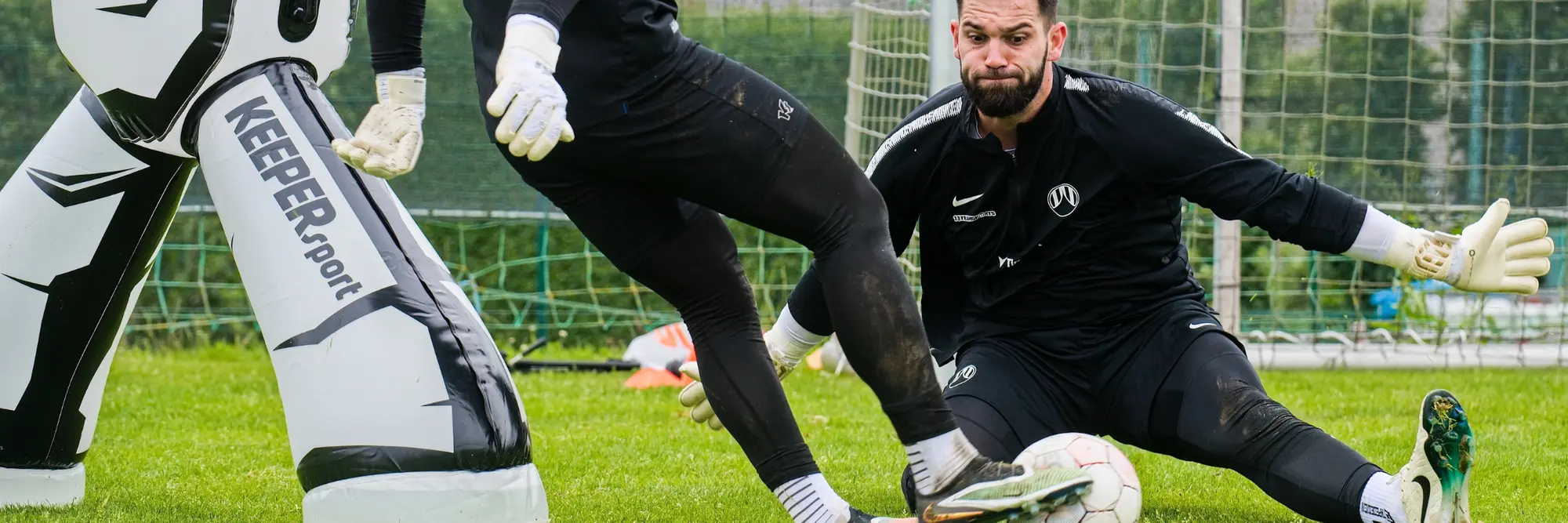
Why Pre-Season Training for Goalkeepers Needs to Be Different
A field player builds up basic endurance during preseason training. He runs himself into shape. Your body and mind need something else: the transition from the summer break back to a state of constant readiness.
After weeks without the pressure of competition, you’ve forgotten exactly what makes you stand out in a game. Your anticipation has gotten rusty. The split step is no longer second nature. And your mind has gotten used to the fact that nothing is at stake.
That means your preseason training needs a clear structure. Don’t just randomly put on your gloves and hold balls—you need a structured plan that takes you, step by step, from your summer physique back to being a competition-ready goalkeeper.
The Three Phases of Your Off-Season Training
Phase 1: Reactivating the Basics
The first week isn’t about intensity. It’s about getting your body used to physical exertion again without overtaxing it.
The focus is on proper technique without speed. Catching techniques, footwork, takedown techniques—go through everything again at a slow pace. At the same time, build core stability and flexibility so that the explosive demands of the following weeks don’t immediately lead to injuries.
Why it works: If you cut corners here and push at full intensity right away, you’ll end up with a strain or overexertion in week two or three. Your body needs this foundation to truly be resilient later on.
Phase 2: Build Goalkeeper-Specific Intensity
Now comes what really sets you apart. Reaction drills with genuine uncertainty, explosive jumping sequences, one-on-one situations. Include at least two sessions per training week that specifically focus on anticipation and decision-making under pressure—not just execution.
At the same time, the intensity of goalkeeper training increases noticeably. More jumps, more changes of direction, more aerial duels. Your body needs to relearn what it means to be explosive from a standing start.
Why it works: This phase determines whether you’ll be reacting at the start of the season or just still training. If you focus solely on building endurance and general fitness here, you’ll be in good shape physically on opening day but will still be lagging behind in goalkeeper-specific skills.
Phase 3: Getting Ready for Competition
The final days before the first game are for scaling back, not ramping up. Reduce intensity, boost freshness. Continue to train hard, but keep sessions shorter. Incorporate scrimmages or game-like scenarios that create real pressure situations: penalty kicks, set pieces, and communication with a defense that isn’t yet fully gelled.
Use this phase to test your match-day routine as well. Warm-up routine, mental preparation, equipment—everything should already feel familiar on the first day of competitive play, not new.
Why it works: A goalkeeper who tries out his own routine for the first time on game day gives away the confidence he could have gained during preparation.
The Most Common Mistakes in Preseason Preparation
Too much focus on conditioning, too little on reaction: Being in good physical shape isn’t enough when the first milliseconds of a game determine whether you concede a goal.
Too rapid an increase in workload: If you demand full intensity right from week one, you risk injuries before the season has even begun. Build up the workload gradually, week by week.
No practice games with real pressure: Pure training without competitive situations won’t prepare you for the real thing. Before the season starts, deliberately seek out situations with real pressure to perform.
Mental preparation is overlooked: Preparation doesn’t end with physical conditioning and technique. If you don’t train your mind as well, you’ll be physically ready on opening day but mentally still in summer mode.
Your Preseason Checklist
✅ Week 1: Focus on technique without speed; build core stability and flexibility.
✅ Weeks 2–3: Reaction and decision-making drills under uncertainty; increase the intensity of goalkeeper training.
✅ Final week: Reduce intensity, boost freshness, play practice matches under real pressure.
✅ Throughout: Test match-day routines, incorporate mental preparation into training.
✅ First match day: Trust the preparation, don’t rely on improvisation.
Conclusion: Being fit isn't enough—being ready is what counts
The summer break takes a toll on every goalkeeper’s fitness. You can make up for that in three weeks. What you can’t make up for in three weeks is a preseason that ignored your goalkeeper-specific training regimen.
During this preseason, don’t train like a field player who wants to get back in shape. Train like a goalkeeper who has to be ready for opening day—with no second chances.