Match Latex
20–35 uses. Soft, maximum grip, wears out quickly.
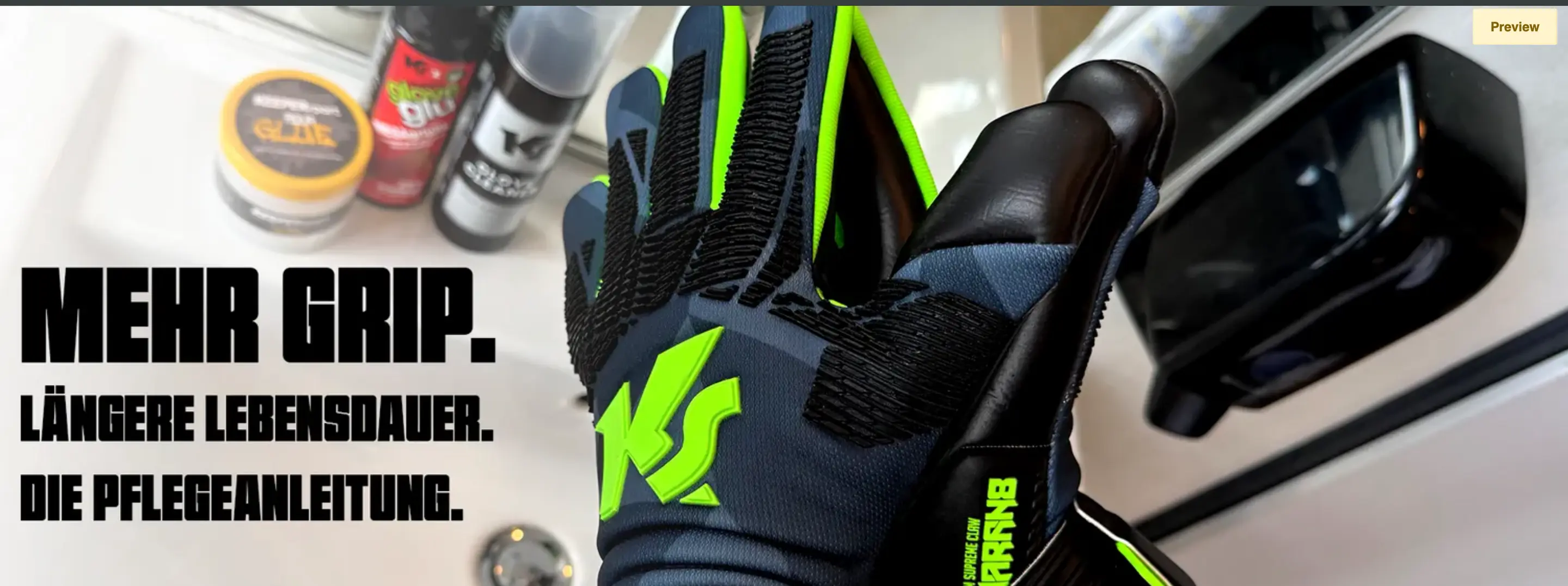
These care tips apply to all brands — Reusch, Uhlsport, adidas, KEEPERsport, etc.
Store gloves in a cool, dry, and dark place. UV radiation makes latex brittle and porous, even through a window. If storing for a long time, lightly moisten the latex every few weeks—latex that has completely dried out loses its elasticity.
Common storage mistakes:
The KEEPERsport GloveBag is a mesh bag for transporting and storing goalkeeper gloves. The mesh allows air to circulate even inside a sports bag, reduces moisture and bacterial growth, and protects the adhesive foam from contact with other materials. If you use gloves that cost €60 or more, it pays for itself quickly.
Goalkeeper gloves should be hand-washed after each use with lukewarm water (max. 40°C) and mild soap, hung up with the opening facing down, and stored in a cool place away from light. With consistent care, a pair of gloves costing €80 will last 3–4 months instead of 4–6 weeks.
These instructions cover everything: first use, proper washing, drying, improving grip, storage, and when it’s time for new gloves.
Goalkeeper glove latex is a living material. It absorbs dirt, sweat, and artificial turf fibers, which attack its porous structure and permanently degrade the grip foam. Manuel Neuer changes his game gloves after every match—amateur goalkeepers can compensate for this with regular care. An unkempt pair of gloves costing €80 will last 4–6 weeks. The same pair, if well-maintained, will withstand 3–4 months of intensive training.
Before using new goalkeeper gloves for the first time, briefly rinse the grip foam under lukewarm water. Soap residue remains on the latex during production, which reduces the initial grip. Rinsing them under the faucet for 30 seconds removes this residue and activates the full grip right from the first save. This applies to every new pair of gloves, regardless of brand or price.
Wash your goalkeeper gloves immediately after every use. The longer dirt remains on the latex, the more damage it causes. Washing goalkeeper gloves takes less than 3 minutes and is the most important part of caring for them.
Here’s how:
More detailed instructions → How to wash goalkeeper gloves without damaging them
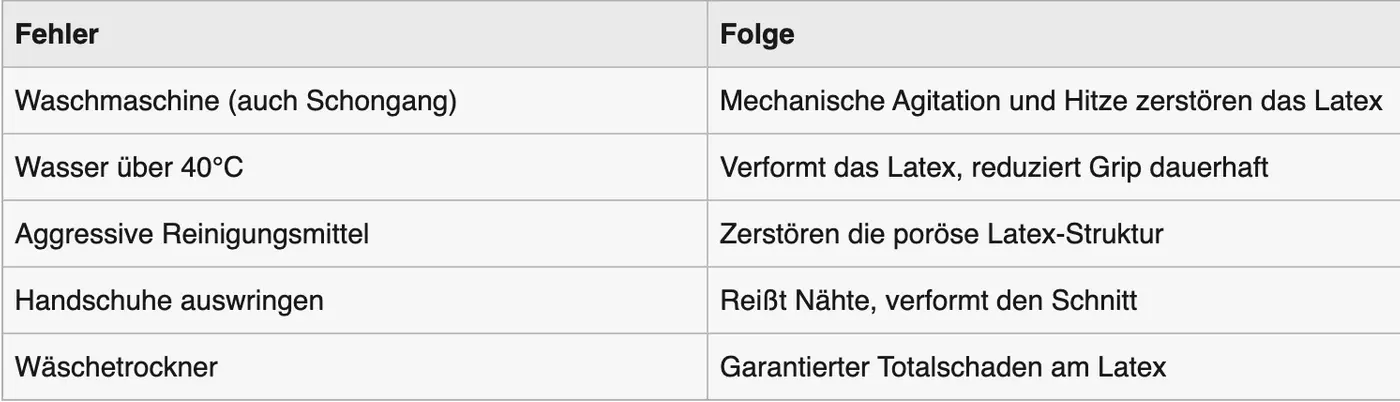
By hand or in the washing machine—the clear answer
Always by hand. Even a washing machine’s gentle cycle generates temperatures and agitation that the latex in goalkeeper gloves can’t withstand. If you’re short on time: 2 minutes under lukewarm water is enough for a quick clean between training sessions.
Hang gloves with the opening facing down, in a well-ventilated area away from direct sunlight and heat sources. This position prevents residual moisture and dirt from getting trapped in the fingers and allows for even air circulation inside the glove.
Under normal conditions: 12–24 hours until completely dry. In winter or in humid rooms: up to 36 hours.
Never do this:
The grip of goalkeeper gloves decreases over time due to abrasion and the buildup of residue. There are four methods to restore or maintain it. If none of them work, the latex has reached the end of its service life.
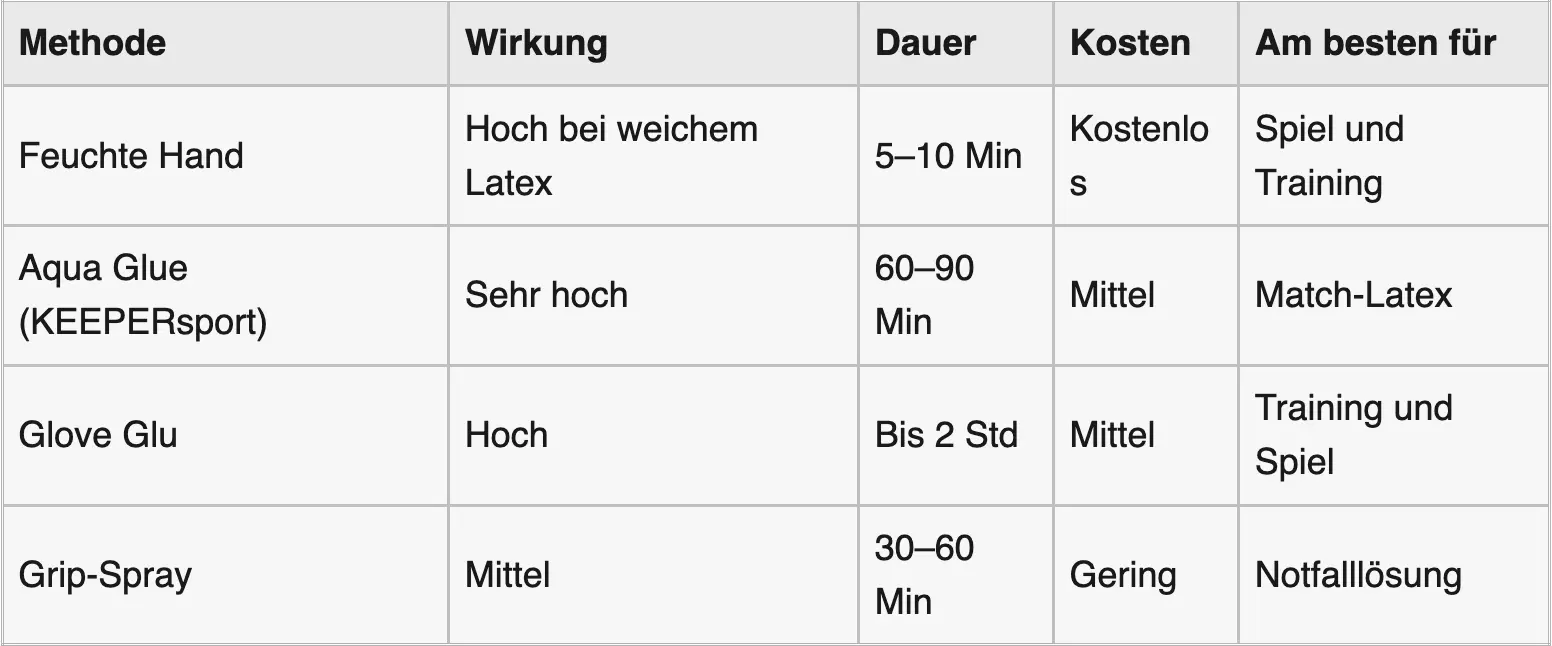
A damp hand is the simplest and free method. Moisten the adhesive foam just before each play—soft match latex reacts immediately, providing better grip.
Aqua Glue (Uhlsport) is applied with the included brush a few minutes before the game. Ideal for soft match latex, it lasts about 60–90 minutes.
Glove Glu (Reusch) forms a thin protective layer on the latex. It lasts longer than Aqua Glue and also works on training latex. Application: 2–3 sprays from a distance of 15 cm.
Their lifespan depends on the type of latex, how often they’re used, and how well they’re cared for. Latex is a consumable material: the softer and grippier it is, the faster it wears down.
Signs that it’s time for new gloves:
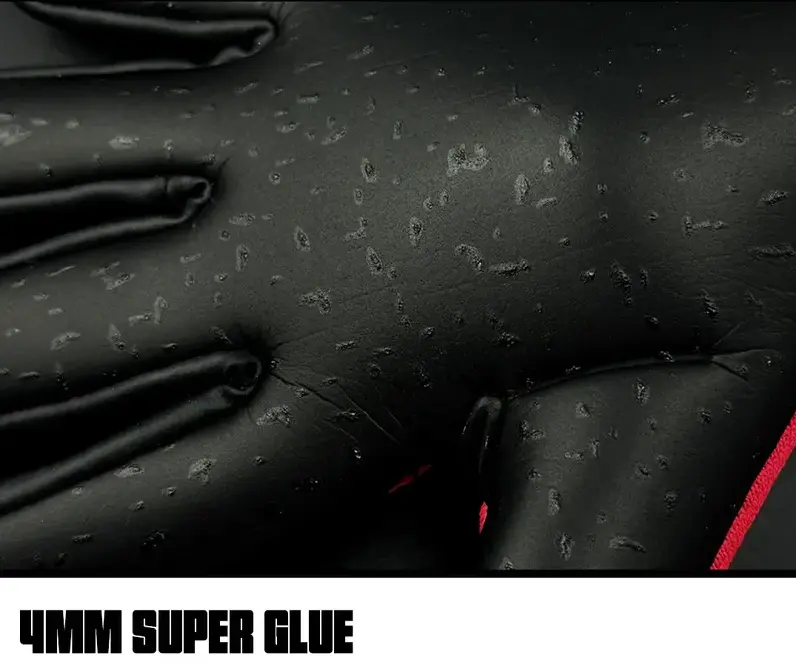
20–35 uses. Soft, maximum grip, wears out quickly.
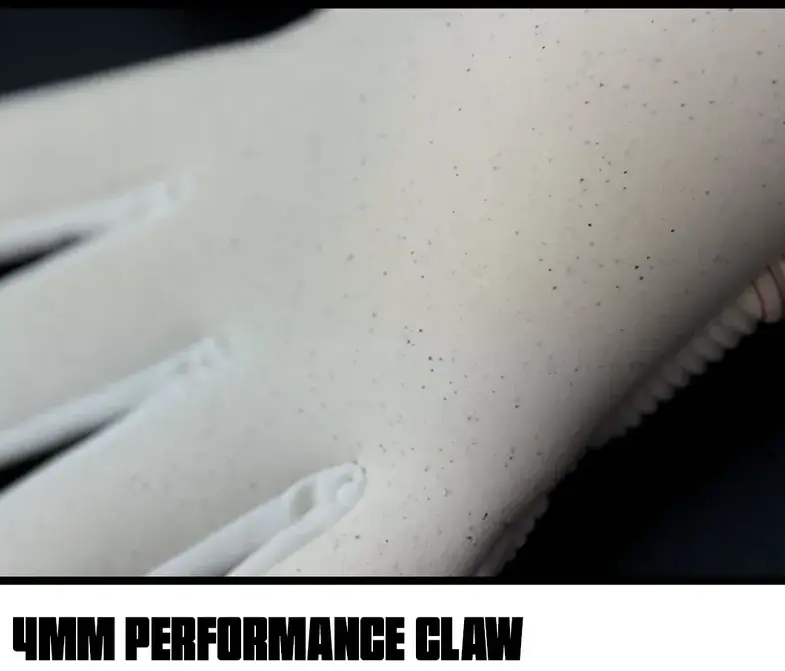
40–60 uses. A balance of grip and durability.

60–100+ uses. Durable, abrasion-resistant, for daily training.
The most important questions about washing, drying, grip, and durability—answered briefly and directly.
No. Even the gentle cycle irreversibly damages the latex due to heat and mechanical agitation. Always wash by hand with lukewarm water (max. 40°C) and mild soap.
After every use. Dirt and sweat take a toll on the latex by the hour. Two minutes under lukewarm water after each workout is enough for basic care.
Wet your hands for immediate results. Aqua Glue by Uhlsport for match latex. Glove Glu by Reusch for longer-lasting results. If none of these work, the latex is worn out.
Mild hand soap or a special glove cleaner. No solvents, no bleach, no harsh fragrances.
Hang it with the opening facing down, in the open air, at room temperature. No hair dryer, no radiator, no direct sunlight. Drying time: 12–24 hours.
Rinse the adhesive foam under lukewarm water for 30 seconds. This removes manufacturing residues and activates the grip right from the first save.
It's not mandatory, but it noticeably extends the life of the latex. It allows for air circulation during transport, protects against contact with other materials, and prevents the adhesive foams from sticking together.
When the grip foam physically peels away, there are deep cracks in the palm, or no grip product works anymore. Aqua Glue and Glove Glu compensate for normal wear and tear—not the end of the latex’s life.
Author: Simon Harrasser — Professional goalkeeper and product expert at KEEPERsport. Drawing on years of experience on the field, Simon discusses what kind of care truly protects latex, what mistakes most goalkeepers make, and when a glove has truly reached the end of its life.