80th minute. 1-0 lead. Corner kick for the opponent.
Your penalty area is packed. Eight or nine players are standing in front of you. The corner kick taker positions the ball. The next five seconds will decide whether your team can hold on to its lead or not.
What do you do?
The answer to this question separates good goalkeepers from true leaders. It’s not your reflexes that decide this situation. It’s not your jumping ability. It’s what you do in the seconds BEFORE the corner kick: You communicate.
You organize your defense. You call out assignments. You point out opponents. You put your arm on the shoulder of the player in front of you and nudge him three meters to the right. Even before the ball is in the air, you’ve organized the situation.
That is goalkeeper leadership. And it can be trained.
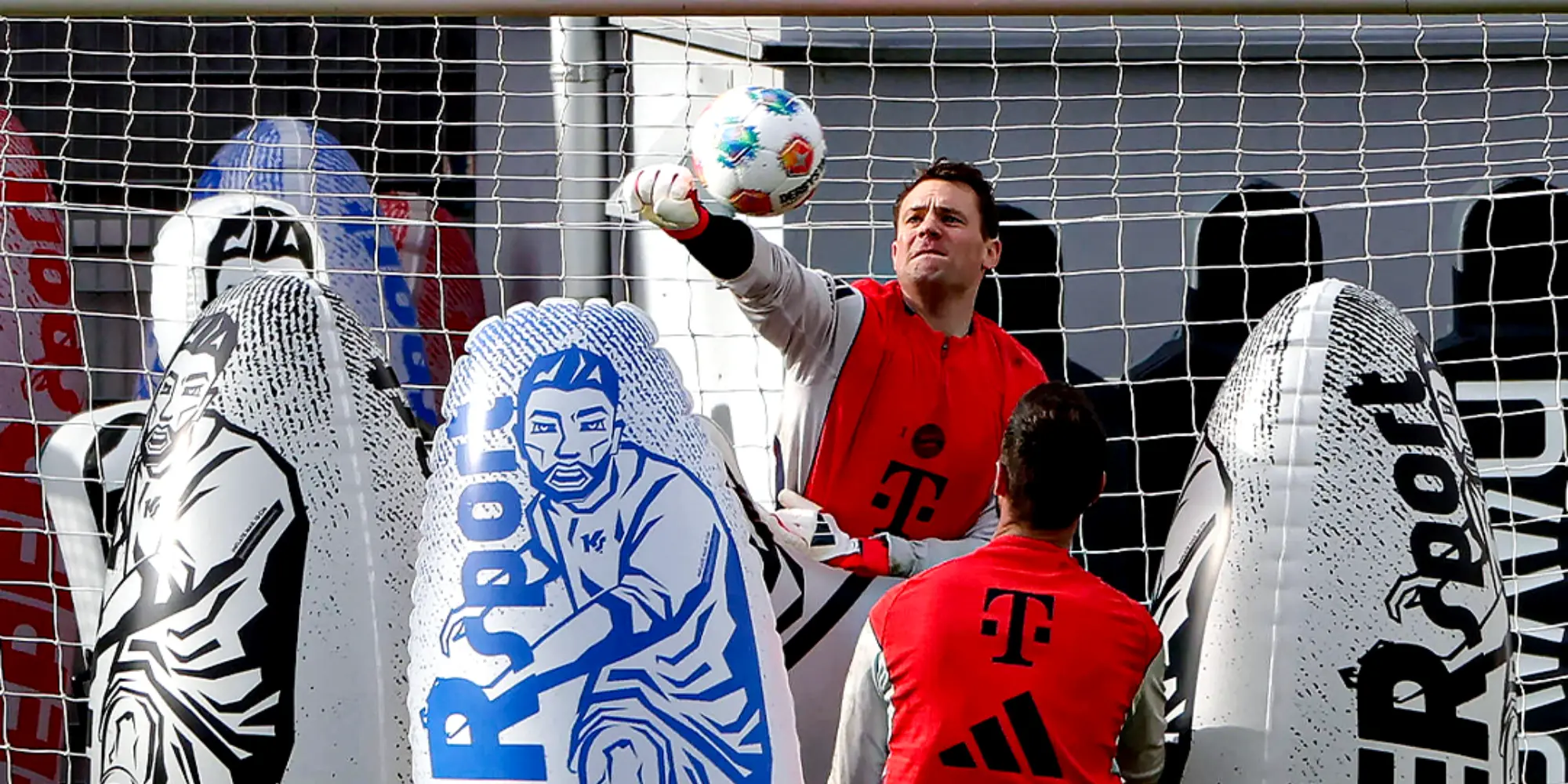
Your overview only becomes a real strength through communication
As a goalkeeper, you have an advantage that no other player has: you can see the entire field in front of you. Running paths, open spaces, opponents behind your teammates. This information is worth its weight in gold.
But only if you pass it on.
The reality: Most goalkeepers see the danger coming and only react when it’s too late. A leader doesn’t just react. A leader prevents the danger from arising in the first place. And that’s only possible through communication.
The 5 Types of Communication in Goaltending
Communication in goal isn't just about "being loud." There are different types, and each has its place in the game.
1. Organizational Communication
When: Before kickoff, during stoppages in play, before set pieces, during lulls in the game.
What you say:
- "Push the back line! Left! Left!"
- "Closer together! Hole in the middle!"
- "Short goal kick, Leo, come on!"
Why it’s important: You shape the defense before the opponent attacks. The best goalkeepers in the world do this constantly. Not just on set pieces, but in every phase of the game. If your back four is standing 30 meters in front of you and you see that the gap between the center backs and the fullbacks is too wide, you have to correct it. Immediately. Loudly.
2. Warning Communication
When: During the game, when your teammates don’t see the danger.
What to say:
- "Man behind
you!" - "Space! Space!" (when a teammate has room)
- "Push forward!" (when the opponent isn’t pressing)
- "Watch out on the right!"
Why it’s important: Your teammates can’t see what’s happening behind them. You can. Every warning you give in time prevents a dangerous situation. Many goals conceded aren’t the result of technical errors, but because a player didn’t know someone was lurking behind them.
3. Ball-Claim Communication
When: On crosses, corners, and high balls into the penalty area.
What to say:
- "ME!" or "GOALIE!" (if you’re going for the ball)
- "CLEAR!" (if you’re NOT going for it and the defender should clear it)
Why it’s important: There are only two options here. Yes or no. No hesitation, no whispering. If you decide to go for the ball, do so with full conviction and at full volume. Half-hearted calls lead to collisions and misunderstandings.
A goalkeeper who doesn’t communicate on crosses is a danger to his own team.
4. Motivational Communication
When: After conceding goals, during weak phases, in high-pressure situations.
What to say:
- "Keep going! Next ball!"
- "Head up, it happens! Focus!"
- "Come on, 20 minutes to go!"
Why it’s important: After conceding a goal, many teams’ body language breaks down. Heads drop, shoulders slump. As the goalkeeper, you’re the only one who sees this from the back and can immediately take countermeasures. Your confidence rubs off on the team. Just as your insecurity does.
5. Silent Communication
When: Always.
What to do:
- Stand tall, even after mistakes
- Maintain eye contact with your defenders
- Position yourself actively (standing tall shows confidence)
- Use hand signals instead of shouting in loud stadiums
Why it’s important: Communication is more than just words. Your teammates read your body language. A goalkeeper who hangs his head after conceding a goal sends a clear signal: “I’m unsettled.” A goalkeeper who stands tall, collects the ball, and immediately organizes the defense sends the opposite message.
Expert Analysis: Jordan Pickford at the European Championship
One goalkeeper who has mastered all five types at a world-class level is Jordan Pickford. During the European Championship, we saw how, even in stoppage time during a corner kick against England, he personally addressed each defender, assigned them a specific opponent, and confirmed the assignments aloud. Only once everyone knew where they were positioned did he signal to the referee.
This is no coincidence. It is a well-rehearsed routine.
What sets Pickford apart: He’s not just loud; he’s precise. He doesn’t just say “Watch out!” but “Kyle, number 9, your man!” The difference is huge. A general shout gets lost in the noise. A direct instruction with a name gets heard and followed.
Manuel Neuer also demonstrates a crucial aspect of goalkeeper communication: decisiveness. When Neuer decides to come out for a high ball, he does so without hesitation. He communicates through his actions, not just his voice. His team knows: when Neuer comes out, he clears the ball. This reliability stems from clear, repeatable patterns.
Confidence, presence, and leadership—your voice plays a key role in determining the outcome
Don’t let external shouts like “Goalkeeper!” or other calls throw you off. You alone decide whether to go for the ball or not. Your awareness and timing are crucial. If you decide to go for the ball, do so with complete conviction. Half-hearted actions often lead to mistakes.
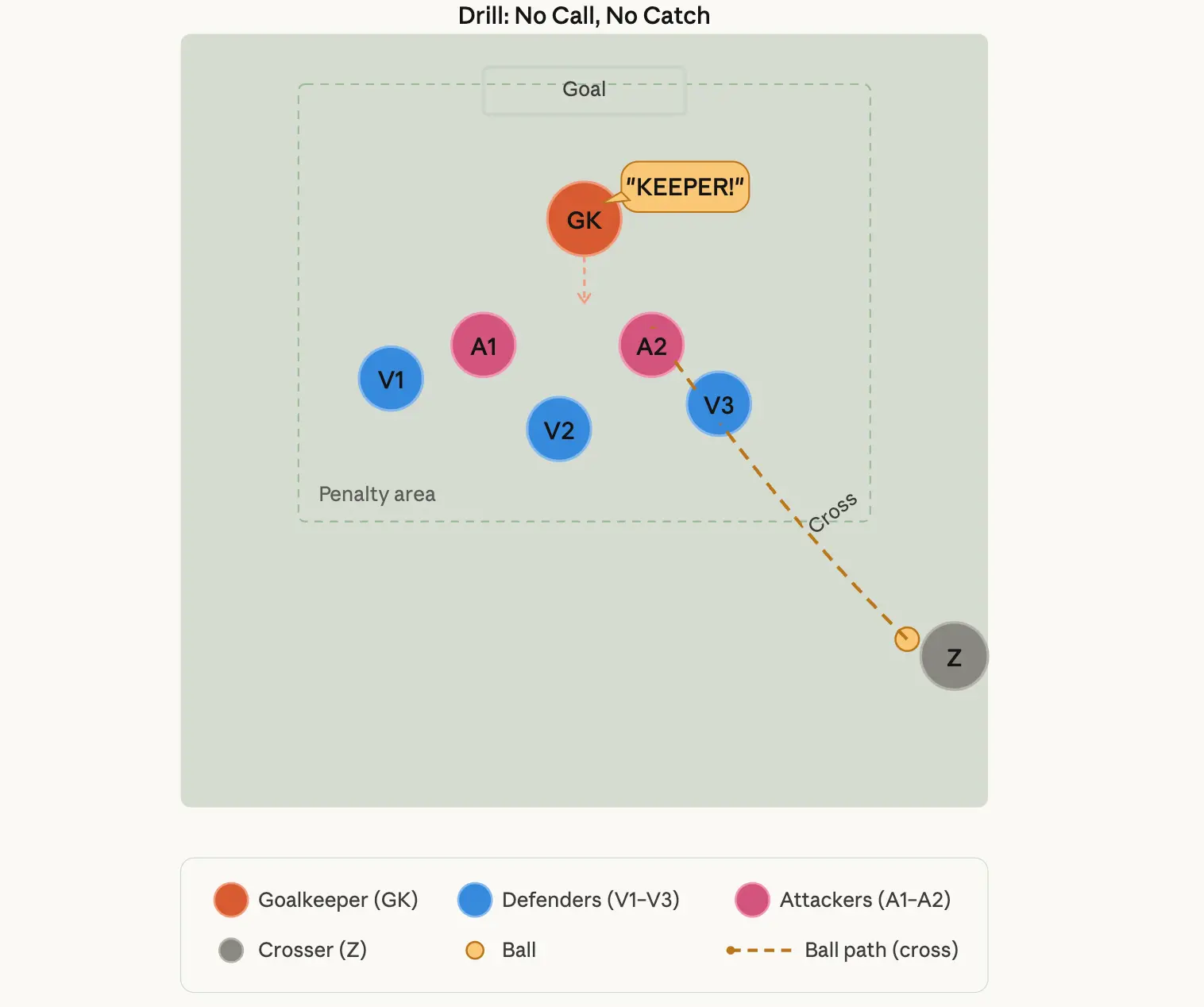
Training drill: "No call, no catch"
This simple drill helps develop communication as an automatic habit. You can incorporate it into any goalkeeper training session.
Setup:
- Standard crossing drill with 2-3 field players in the penalty area
- A passer crosses from the side
Rules:
1. The goalkeeper MUST give a clear command before every action: "ME!" when he goes for the ball, "CLEAR!" when the defender should clear it.
2. If no command is given, the ball does not count. Regardless of whether it is caught or not.
3. If a command is given too late (after the goalkeeper has jumped), it also does not count.
Progression:
- Phase 2: In addition to the cross, the goalkeeper must call out the assignment BEFORE the cross is taken (“Leo, number 7! Max, near post!”)
- Phase 3: Background noise (music, shouts from outside) to practice volume
Coachingpoints
:- Timing is crucial. The call must come BEFORE the ball reaches its
highest point.- The volume must be loud enough for the furthest teammate to hear it
.- When the call is "AWAY!", the goalkeeper stays on the line and secures the space behind it.
This drill may seem simple. But after two weeks of consistent practice, communication shifts from a conscious act to a habit. And that is exactly the goal.
How to Respond to "Keeper!" Calls
One thing that’s often overlooked in training: During a game, you’re influenced by outside factors. Spectators shout “GOALIE!” and opponents yell “LET IT GO!” to throw you off. How do you handle that?
The rule is simple: You only react to voices you recognize. In training, you learn to recognize your teammates’ voices. During the game, you block out everything else.
Specifically,
this means:- Train with the same players so you can recognize their
voices.- Agree on clear code words with your center backs
(e.g., “YOUR BALL” instead of “GOALIE”). - If you’re unsure: Stay on the line. It’s better not to catch a cross than to come out half-heartedly and grab at thin air.
Bottom line: Your voice is your most important tool
A modern goalkeeper isn’t just a reactive player—they’re a leader. Your voice is just as important a tool as your hands. Use your awareness, take charge, and actively coach your team from the back. This will make you not only a better goalkeeper—but also an indispensable part of your team.
Because in the end, the bottom line is this: A goalkeeper who communicates prevents goals—before they even happen.
Stay up to date and sign up for the newsletter
Read more
:- After the mistake: How goalkeepers deal with moments of mental blankness – What to do when communication breaks down and a mistake happens?
- The modern goalkeeper’s game: The Sweeper-Keeper – Communication is the foundation, but the modern game demands even more
.- Pressure in goal? Why that’s good for goalkeepers – How to communicate under pressure without losing your cool.