89th minute, 1–1, corner kick for the opposing team.
The ball sails low and sharp from the right side into the five-yard box, three attackers are lurking at the penalty spot, and your defender loses his mark. It is precisely at this moment that it is decided whether you act as a safety net or a risk. Safely intercepting crosses is one of the most challenging—and at the same time, most influential—actions in modern goalkeeping. In this article, we’ll show you what really matters.
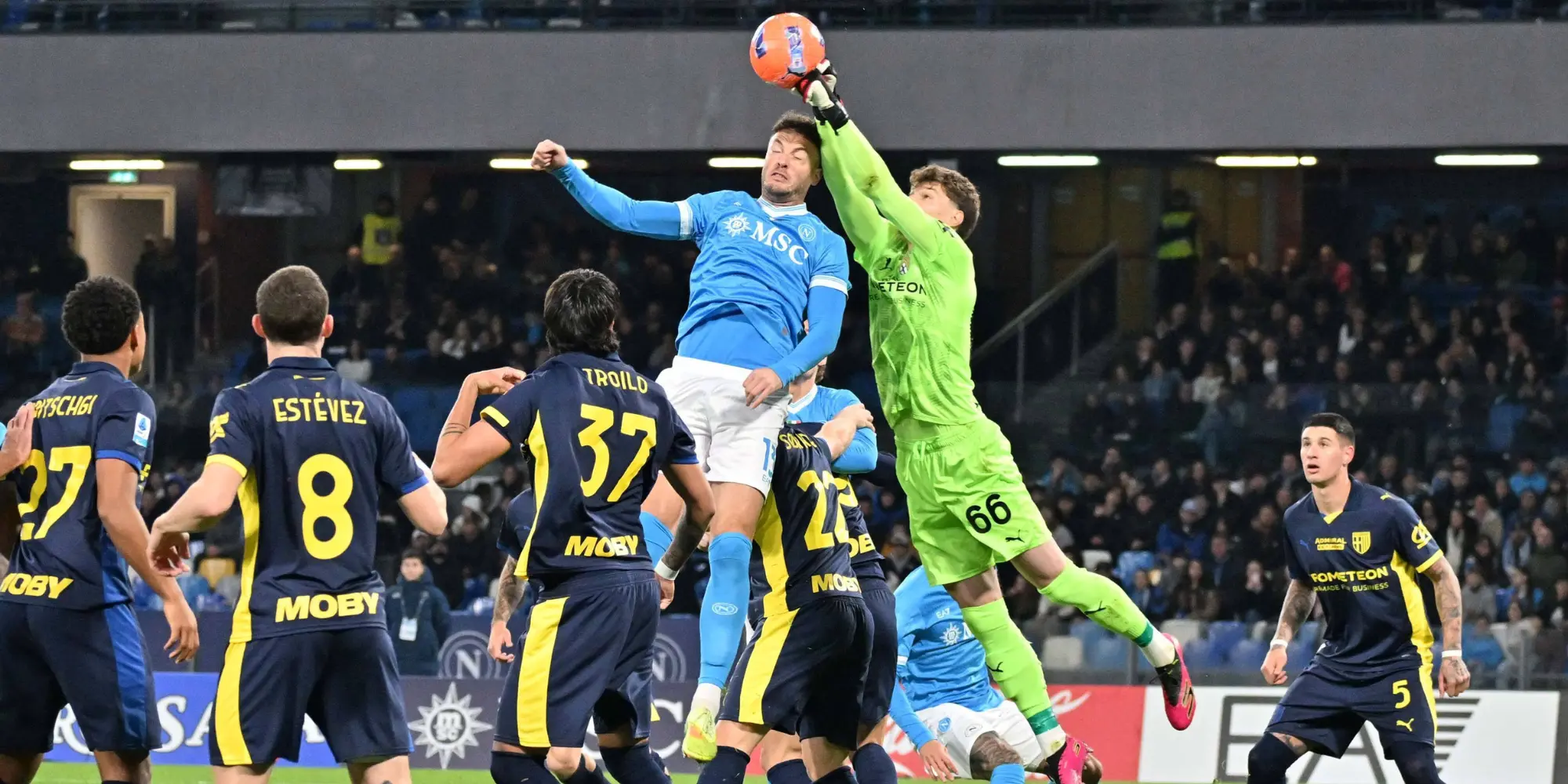
WHY WING PLAY IS SO OFTEN UNDERESTIMATED
Many goalkeepers train their reflexes and shot-stopping technique intensively, but neglect their play in the air. Yet it is precisely these situations that decide games. A goalkeeper who consistently and confidently catches crosses takes the pressure off the entire defensive line and exudes an authority that rubs off on the whole team.
The problem: Crosses present several challenges at once: reading the ball’s trajectory, timing the leap, physical contact with field players, spatial awareness, and the final grip with the glove. A goalkeeper who acts hesitantly here risks not only conceding a goal but also losing the trust of their backline.
TECHNICAL BASICS
Positioning and Anticipation
The first mistake often happens before the ball has even been struck. If you’re standing too far back on the goal line when the cross is played, you’ll be forced to react. Be proactive: as soon as the ball is played in, take a small step toward the expected path of the ball. This saves crucial milliseconds and gives you momentum for your jump.
Always keep the split-step movement in mind: a short, springy landing on both feet just before the opponent’s cross, which allows you to move explosively in either direction. This momentum gives you quick reaction times and prevents you from freezing up.
Reading the Ball’s Path and Timing
The difference between a confident and an uncertain interception almost always lies in timing. The sooner you assess the angle of departure and the flight path of the cross, the more controlled your jump will be. Train your eye to focus on the ball’s trajectory and speed: low crosses require different anticipation than high, arcing crosses.
Tip: Shout "KEEPER!" loud and clear as you jump. This signals to your defense early on who has the ball and prevents collisions in the air. Consistent command is just as important as the technique itself.
Takeoff and Body Position
Always jump off with the leg on the side of the ball to use your body as a shield. Bring your free knee up to protect yourself from body contact while also enhancing your jump. Your body shields you from the attacker without committing a foul. At the highest point, extend both arms toward the ball with open, tense hands.
✅ Use the ball-side leg as
the takeoff leg ✅ Pull the knee of the free leg
up for protection ✅ Reach both hands toward the ball, thumbs together
✅ Actively grab the ball, don’t just block it
✅ Establish a secure starting position after the interception
Secure grip at the decisive moment
In aerial battles, the first contact is what counts. Actively grab the ball with both hands and try to bring it against your body immediately. Keep your fingers spread wide and relaxed to wrap around the ball optimally. A grip that’s too tense often causes the ball to bounce off.
3 Exercises for Effective Wing Play
Star Ball Warm-up with Cross Finishing
Activate coordination and hand-eye coordination with the reaction ball or classic star throws. After 6 quick reaction drills, a cross is thrown in from about 15 meters, which you catch while jumping.
Objective: To activate pre-activity and transition from reaction to anticipated jumping technique. Ensure consistent commands for each cross.
Intercepting crosses with a defender near the goalkeeper dummy
A coach or second goalkeeper throws or kicks the cross in from the sideline. A KEEPERdummy or a field player simulates physical contact in the jumping area. The goalkeeper jumps, reaches for the ball, and brings it down securely.
Variation: Vary the dummy’s position (penalty spot vs. near post) to practice different running paths and jumping angles. Train both sides equally, as the weaker side always comes into play during a match.
Drill: 4v2 Cross Decision-Making Drill
On half the field: 4 attackers build up play down the wings, 2 defenders cover the penalty area. On a signal, a cross is delivered from a predefined zone. The goalkeeper decides independently: intercept (using the "KEEPER!" command) or stay in the goal.
Objective: Decision-making under pressure, spatial awareness, and communication with the defense. Repeat the scenario immediately after a wrong decision to internalize the correct reading of the situation. Use "GO!" as a clear command for your defense when you’re not coming out.
THE MOST COMMON MISTAKES AND HOW TO AVOID THEM
Coming in too late: Many goalies wait until the ball is almost there. By then, they lack the momentum needed for a controlled leap. Practice reading the ball’s trajectory early, not just relying on a reflexive leap.
No command: Silence in the penalty area leads to collisions. Make it a habit to shout “GOALIE!” loudly every time you catch a cross, even in practice. What doesn’t become automatic in practice certainly won’t work under the pressure of a game.
Deflecting with one hand: If the ball cannot be caught securely, a clean two-fisted punch is always preferable to a one-handed punch. More control, less risk. The one-handed save remains the last resort.
Wrong take-off foot: If you take off with the wrong foot, you turn your body away from the play and lose your field of vision. Practice the technique first without an opponent until the movement is second nature.
CONCLUSION
Catching crosses reliably isn’t a matter of talent, but of training. Those who systematically practice anticipation, jumping technique, and communication won’t hesitate in high-pressure situations—they’ll act. The difference between the goalkeeper who catches the cross in the 89th minute and the one who lets it slip through rarely lies in the moment itself, but in the hundreds of repetitions that came before.
YOU WIN CROSSES IN TRAINING, NOT IN THE GAME.
Work regularly on your basic positioning, invest time in reading ball trajectories, and make shouting commands a habit. With the right exercises and the necessary repetition, you’ll become the anchor of your defense, viewing crosses not as a threat but as an opportunity.
Train hard. Stay alert. And shout "GOALIE!" so loud that even the last attacker in the wall can hear you.
Stay up to date
Read more:
- Improving Reaction Time – How to Train Like a Pro
- The Goalkeeper as a Leader: Why Communication Decides Games - Goalkeeper Communication in Detail: The 5 Communication Styles in
Goalkeeping - After the Mistake: How Goalkeepers Deal with Blackout Moments - What to Do When Communication Fails and a Mistake Happens?